Mango Pulp Manufacturers in India: A Complete Guide to Choosing the Right Bulk Supplier
It is important for food and beverage companies which buy fruit ingredients in large quantities to select the right mango pulp manufacturer in India. By using a trustworthy supplier, businesses are able to keep product quality, their production schedules and their supply needs steady at the same time as meeting food safety and export standards. Mango Pulp, or Mango Puree, is commonly used in a variety of products such as drinks, dairy items, desserts, sauces, bakery goods, confectionery and other processed foods.
When manufacturers are buying in large amounts, they should carefully consider several factors, including the type of fruit, the Brix level, the processing methods, packaging, certifications, shelf life and supply capacity before deciding on a supplier. If you are obtaining natural mango pulp, aseptic mango pulp, organic mango pulp, or mango-based ingredients for use in industrial production, knowing what to look for in a supplier will help make your large-scale purchasing more efficient.
What Should Bulk Buyers Check Before Purchasing Mango Pulp?
When assessing a supplier of mango pulp, product quality should be one of the first factors to consider. The pulp is usually used as a main ingredient, and as such its properties can have a direct effect on the taste, colour, smell, texture, and the overall quality of the final product. Before making a large commercial purchase, buyers ought to ask for the product specifications and, if possible, check the samples. A competent mango pulp manufacturer should then be able to supply the relevant technical information and quality records.
Important factors include:
-
Mango variety: Different mango varieties have distinct levels of sweetness, aroma, colour, acidity, and texture. The right variety should be selected according to the final application.
-
Brix level: Brix indicates the soluble solids present in the pulp and can help manufacturers determine whether a particular product is suitable for their formulation.
-
Colour and appearance: Consistent and characteristic mango colour can be important for beverages, desserts, dairy products, and other finished foods.
-
Taste and aroma: Quality Mango Puree should retain the characteristic flavour and aroma associated with ripe mangoes.
-
Texture: A smooth and consistent texture is particularly important for beverages, desserts, sauces, and other puree-based applications.
-
Food safety: Buyers should review microbiological controls, processing procedures, testing protocols, and applicable certifications.
-
Packaging: Bulk packaging should protect the product during transportation, handling, and storage.
-
Shelf life: Storage conditions, packaging format, and expected shelf life should be clearly understood before procurement.
Alphonso or Totapuri: Which Mango Pulp Is Suitable for Your Application?
The choice of mango variety depends on the intended application, formulation requirements, flavour profile, target market, and commercial considerations. Alphonso mango pulp is widely associated with its rich aroma, distinctive flavour, vibrant colour, smooth consistency, and natural sweetness.
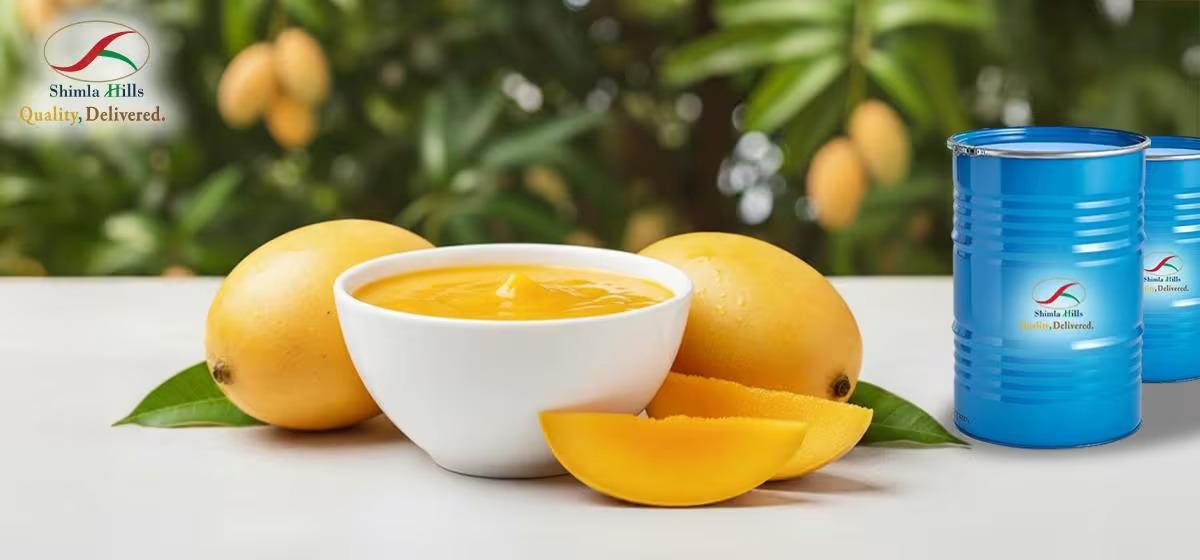
It can be considered for premium beverages, desserts, dairy products, fruit preparations, and other applications where mango flavour is an important part of the finished product. Totapuri mango pulp, on the other hand, is commonly used for industrial food and beverage applications because of its balanced flavour profile and versatility. It works well as a mango base in formulations where consistency and commercial practicality matter.
Bulk buyers can consider the following factors:
-
Alphonso: Rich aroma, distinctive mango flavour, vibrant colour, and suitable for premium formulations.
-
Totapuri: Balanced flavour, versatile application, and commonly used for industrial processing.
-
Application: Select the variety according to beverages, dairy products, desserts, sauces, bakery products, or other formulations.
-
Target market: Premium products may require a different flavour and aroma profile from value-focused mass-market products.
-
Seasonality: Understanding mango harvesting and processing seasons can help manufacturers plan procurement and production requirements.
-
Formulation: The required Brix, acidity, colour, flavour, and consistency should match the final recipe.
Why Is Aseptic Mango Pulp Important for Bulk Food Manufacturers?
Packaging and preservation methods are important considerations when purchasing fruit ingredients in commercial quantities. Aseptic mango pulp is processed and packed using controlled conditions designed to protect the product from contamination and support its storage and transportation requirements.
For international buyers and large food manufacturers, aseptic packaging can be particularly relevant because bulk ingredients may need to travel long distances before reaching the production facility.
When evaluating aseptic mango pulp, buyers should discuss:
-
Packaging format and available pack sizes
-
Recommended storage conditions
-
Shelf-life requirements
-
Processing and filling procedures
-
Batch traceability
-
Product specifications
-
Transportation and handling requirements
Natural Mango Pulp vs Mango Pulp Concentrate
Understanding the difference between standard pulp and concentrate is another important step for bulk buyers. Natural mango pulp comes from ripe mangoes and retains the fruit's characteristic flavour, colour, and consistency. It can be used across a wide range of food and beverage applications, depending on the product specification. Mango Pulp Concentrate is processed to reduce water content and create a more concentrated ingredient. This can be useful for manufacturers that require specific formulation characteristics or want to optimise ingredient handling and transportation.
The choice between mango pulp and concentrate should be based on:
-
Final product formulation
-
Required Brix
-
Processing method
-
Storage requirements
-
Transportation considerations
-
Desired flavour and colour
-
Production scale
What Makes a Reliable Mango Pulp Manufacturer in India?
Finding a supplier is not simply about comparing prices. Bulk buyers need to evaluate whether the supplier has the infrastructure, quality systems, documentation, production capacity, and experience required to support long-term commercial requirements. A reliable mango pulp manufacturer should be able to demonstrate consistency from raw material sourcing through processing, packaging, quality control, and dispatch.

1. Modern Processing Facilities
A professional manufacturing facility should have appropriate equipment and controlled processes for handling, processing, and packaging mango pulp. Well-managed production systems can help maintain consistency between batches.
2. Strong Quality Control
Quality checks should be carried out throughout the production process. Buyers should ask about testing procedures, batch controls, specifications, and quality documentation before entering into a long-term supply arrangement.
3. Reliable Raw Material Sourcing
The quality of the finished pulp depends heavily on the quality and suitability of the mangoes used during processing. A dependable supplier should have appropriate sourcing and procurement procedures for the required mango varieties.
4. Consistent Production Capacity
Bulk buyers should confirm whether the supplier can meet their required volume, including during periods of high demand. Production capacity is particularly important for international buyers with scheduled manufacturing and delivery commitments.
5. Complete Documentation
Commercial buyers may require product specifications, certificates, laboratory reports, technical information, and other documentation. A professional supplier should be able to provide the relevant documents for the product and destination market.
6. Suitable Bulk Packaging
Packaging should be selected according to storage, transportation, handling, and production requirements. Buyers should discuss available packaging formats and storage conditions before confirming an order.
7. International Export Experience
For companies sourcing from India, working with an experienced mango pulp exporter can simplify international procurement. Export experience can be valuable when dealing with shipping, documentation, packaging, destination-market requirements, and logistics.
8. Wider Fruit Ingredient Portfolio
A supplier offering multiple fruit ingredients can be useful for food manufacturers that source several ingredients. Instead of managing different suppliers for every product, buyers may be able to consolidate procurement through one experienced ingredient partner.
9. Technical and Commercial Support
Clear communication is essential when purchasing food ingredients in bulk. Suppliers should be able to discuss product specifications, applications, packaging, documentation, lead times, and other commercial requirements with buyers.
Should You Consider Organic Mango Pulp?
Demand for clean-label and organic food ingredients has increased interest in organic mango pulp among food and beverage manufacturers. Businesses targeting organic product categories should verify the applicable organic certification, processing requirements, documentation, and supply chain controls before purchasing.
Organic mango pulp may be considered for products such as:
-
Organic beverages
-
Fruit drinks
-
Dairy products
-
Desserts
-
Baby and children's food formulations
-
Sauces and fruit preparations
-
Organic food products


Comments
Post a Comment