Mango Pulp Manufacturers in India: A Practical Guide for Bulk Procurement
It is important for companies which are engaged in the production of beverages, dairy products, desserts, sauces, confectionery and other food items to select the right manufacturers of mango pulp in India; such a supplier can assist in keeping the product consistent, fulfilling production schedules, and making large-scale purchases easier.
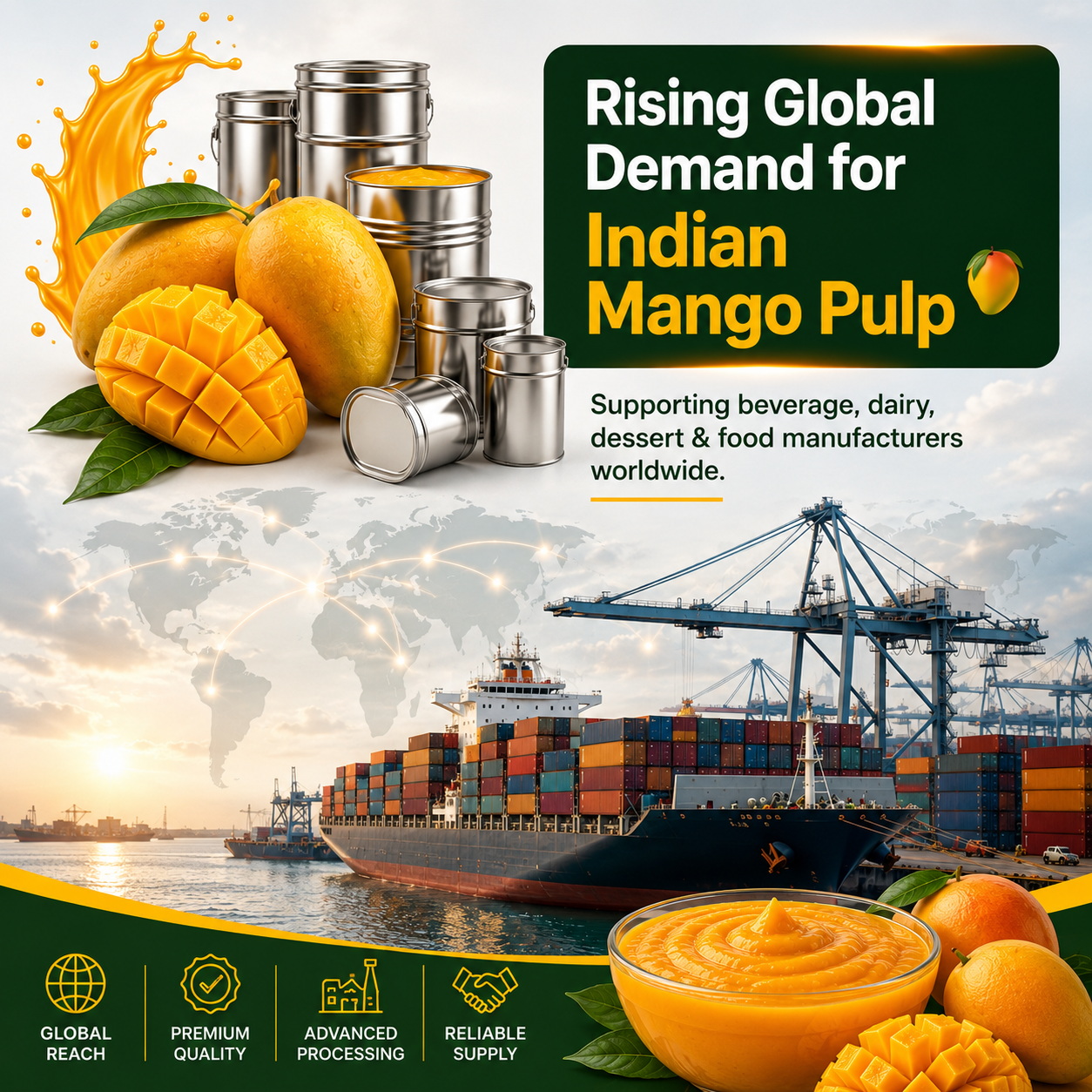
When choosing suppliers, both for international and domestic buyers it is necessary to consider other factors in addition to price; before placing a commercial order all of these aspects should be evaluated namely fruit quality, processing standards, production capacity, documentation, packaging, and supply reliability.
Essential Quality Parameters for Bulk Mango Pulp
Before buying large quantities of mango pulp, it is important for buyers to become familiar with the specifications needed for their specific application since the properties of the pulp can directly affect the colour, flavour, consistency, and the overall performance of the final product. A professional supplier must be able to give clear product specifications together with the appropriate quality documentation and it is also a sensible idea to ask for samples before finalising a bulk order in order to check whether the pulp matches the required formulation.
Important parameters to consider include:
-
Mango variety: Different varieties offer distinctive levels of sweetness, aroma, colour, acidity, and texture.
-
Brix: The Brix value indicates the soluble solids present in the pulp and should be suitable for the intended food or beverage formulation.
-
Colour: Consistent and naturally appealing colour is particularly important for beverages, desserts, dairy products, and other consumer applications.
-
Flavour and aroma: Good-quality pulp should deliver the characteristic sensory properties associated with ripe mangoes.
-
Consistency: A uniform and smooth texture can make the ingredient easier to incorporate into different formulations.
-
Food safety: Buyers should review microbiological controls, processing practices, testing procedures, and relevant certifications.
-
Packaging: Bulk packaging should protect the product against contamination and damage throughout transportation and storage.
-
Storage and shelf life: Buyers should confirm recommended storage conditions and shelf-life information before finalising procurement.
Selecting Between Alphonso and Totapuri Mango Pulp
When choosing a mango variety it should be on the basis of the formulation, the sensory requirements, the production process, and the target market not simply by picking one variety instead of another. Alphonso is well known for its characteristic smell, full flavour, appealing colour, and smooth pulp. It can therefore be used in products in which mango flavour and sensory appeal are important. Meanwhile, Totapuri has a different taste profile and is commonly used in a number of industrial food-processing applications. Because of its properties it can be used in formulations in which a reliable mango ingredient is needed for large-scale production.
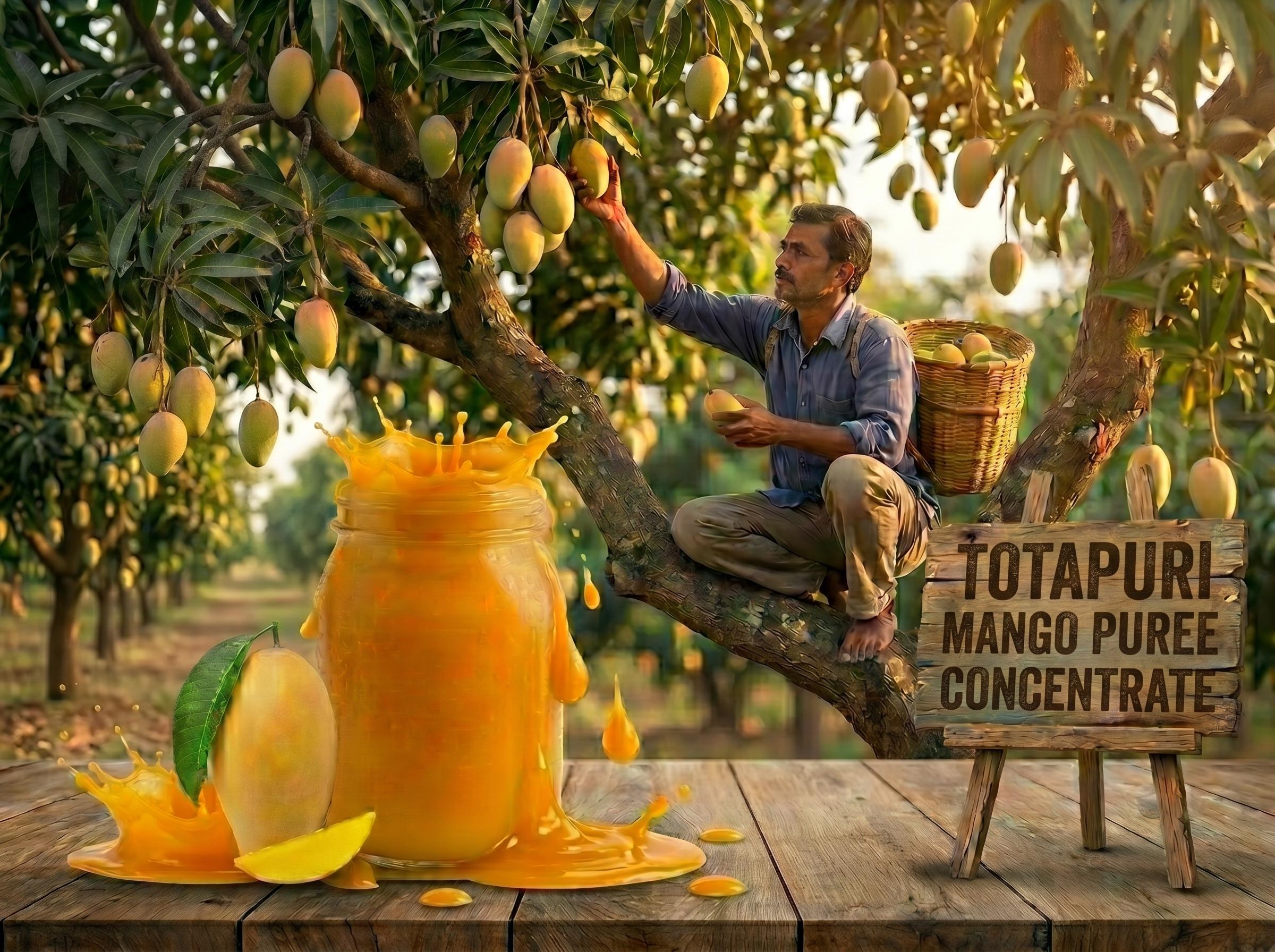
When comparing the two varieties, buyers should consider:
-
Alphonso: Rich aroma, sweet flavour, attractive colour, and suitable for premium-oriented formulations.
-
Totapuri: Balanced characteristics and versatility across a range of industrial food applications.
-
Product formulation: The final application—such as beverages, dairy products, desserts, sauces, or bakery products—should guide the selection.
-
Market positioning: Premium products may require specific sensory characteristics, while mainstream products may have different formulation requirements.
-
Procurement planning: Understanding the seasonal availability of mango varieties can help businesses plan purchasing, production, and inventory requirements.
Key Factors That Define a Dependable Mango Pulp Supplier
A supplier who is reliable should be able to offer not just a quality product but also handle the needs of bulk buyers by acting as a manufacturer who can keep quality consistent alongside meeting the required volume, documentation, packaging, and delivery requirements. It is particularly important for exporters and international food manufacturers since interruptions to the supply or variations between batches can have an effect on production planning and on commitments to customers. Before selecting a supplier, buyers should examine the following areas:
Manufacturing Infrastructure
Check for processing facilities that have controlled production systems and appropriate food-processing equipment. When production processes are properly managed, they can ensure consistency between various batches.
Quality Control Procedures
A supplier ought to have quality-control procedures in place with respect to raw materials, the processing of materials, the finished products, and storage. Routine testing can help to make sure that the products stay within the agreed specifications.
Fruit Sourcing
The quality of the mango pulp is determined by the raw material used, and the suppliers must adhere to proper fruit-sourcing and procurement practices while keeping the standards for the mangoes received.
Bulk Production Capability
For commercial buyers, production capacity is a major factor to take into account. You should make sure that the manufacturer is able to meet the quantities of your expected order and can keep up the supply when demand is high.
Product Documentation
When placing an order, buyers ought to request the specifications, certificates, test reports, and other documents which are required for their market or application.
Packaging and Logistics
The packaging must be chosen on the basis of the quantity, mode of transport, storage conditions, and the destination. Export buyers should also make sure that the supplier understands the documentation and logistical requirements connected with international shipments.
Export Experience
For foreign buyers, experience in the area of international food supply is valuable; a supplier who is acquainted with export documentation, shipping procedures, packaging requirements, and what is expected in the destination market can help to make the process of procurement more organised.
Wider Ingredient Portfolio
If a company is buying a number of ingredients it may find it advantageous to use a supplier who has a wider range of products; by obtaining mango pulp, mango concentrate and other fruit ingredients from a single supplier the company can simplify the process of dealing with a number of different vendors.
Communication and Technical Assistance
Good communication is also a important element of bulk procurement since suppliers should be able to respond to enquiries, clarify the product specifications, provide the necessary documentation, and help buyers with product selection when it is needed.
How Buyers Can Assess a Supplier Before Placing an Order
A well-organized evaluation process can help companies lessen the risks involved in sourcing and allow them to choose a supplier that fits their needs. Begin by providing the application, the amount needed, your preferred packaging, the destination, and the technical specifications. Ask for a sample of the product and then compare it with your formulation requirements.
The next thing to do is to look at the supplier's manufacturing capabilities, quality records, testing procedures, and any relevant certifications. Buyers should also talk about the lead times, the minimum order quantities, the packaging formats, the storage conditions, and the shipment requirements. In the end, it is necessary to assess whether the supplier is able to keep up the required standard of quality and to provide the goods over the long term; for businesses which buy ingredients regularly, forming a reliable supply relationship can be more important than concentrating solely on the first purchase price.
Conclusion
When looking for mango pulp manufacturers in India one has to carry out a more extensive evaluation than simply comparing prices. Buyers should consider the type of mango, the quality standards, the processing abilities, the documentation provided, the production capacity, the packaging, the experience in exports, and the consistency of supply.
Businesses can choose an ingredient that meets their production needs by sampling the product and checking the technical specifications before placing a bulk order. Moreover, a supplier who carries a wider variety of fruit ingredients can make it easier for companies which have multiple raw-material requirements to source their supplies.
We supply fruit-based ingredients to food and beverage manufacturers and large quantities buyers in various international markets for Shimla Hills Offerings Pvt. Ltd. The company concentrates on ensuring consistent quality, carrying out controlled processing, providing reliable supplies, and offering professional assistance with commercial sourcing needs.


Comments
Post a Comment